Lazy Happy New Year Bunny Redwork Review
As someone who has spent years at craft fair tables, watching customers pick up and put down embroidered goods, I’ve learned to judge a design in seconds. Lazy Happy New Year Bunny Redwork caught my eye immediately—not because it screams for attention, but because it whispers exactly what handmade shoppers want: charm, warmth, and a touch of humor. Let me walk you through why this bunny belongs in your booth rotation.
First Impressions: Soft, Playful, and Booth-Ready
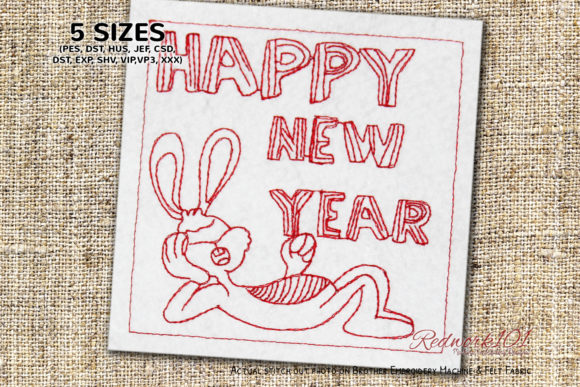
When I first looked at Lazy Happy New Year Bunny Redwork, I felt the classic redwork aesthetic—simple, clean, and timeless. The bunny looks relaxed, almost lounging, with a New Year’s greeting that feels more cozy than loud. It’s not a trendy design that will feel dated next season; it’s the kind of embroidery that fits farmhouse kitchens, rustic gift shops, and modern craft fairs alike. The redwork style gives it a vintage storybook feel, while the lazy bunny adds a wink of personality. Customers at my booth often pause on designs that make them smile, and this one does exactly that.
Best Products for This Design
After testing Lazy Happy New Year Bunny Redwork on several blanks, I’ve found the products where it truly shines. Here’s my honest breakdown:
- Tote bags: The design works beautifully as a centered focal point on a natural canvas tote. The redwork pops against cream or light gray fabric, and the bunny’s relaxed pose makes the bag feel like a cheerful everyday accessory.
- Tea towels: This is where the design feels most at home. Redwork on a linen or cotton tea towel is a classic handmade combo. The Lazy Happy New Year Bunny sits nicely at the bottom hem, adding a decorative touch that doesn’t overwhelm the fabric.
- Aprons: On a half-apron or bib apron, the bunny becomes a conversation starter. Customers at my fair often ask, “Is that a New Year bunny?”—and that question leads to a sale.
- Embroidered patches: For smaller items like caps or pouches, a patch version of this design works well. The redwork lines are bold enough to hold up at patch size, but I recommend testing the scale first.
- Pillow covers: A throw pillow with this bunny feels like a seasonal accent piece. It’s not overly holiday-specific, so it can stay out through January and beyond.
- Market bags and small pouches: The design’s simplicity means it doesn’t get lost on small surfaces. I’ve stitched it onto a small zippered pouch, and the bunny’s lazy expression still reads clearly.
How It Performs in Real Production
I ran Lazy Happy New Year Bunny Redwork through my usual batch production test. Here’s what I found:
- Stitch density: The redwork style means mostly outline stitches with minimal fill. This keeps the design light and flexible. I didn’t notice any puckering or distortion on medium-weight cotton or linen.
- Thread colors: The description notes that the outer box stitch is optional and often a different color. For a true redwork look, I used a single red thread and skipped the box entirely. The design stands strong on its own. If you want to add the box, test the color contrast first—especially on busy fabrics.
- Hoop size: I tested this in a 4x4 hoop and a 5x7 hoop. The smaller hoop works for patches and pouches, while the larger hoop gives breathing room for towels and tote bags. Always check your hoop size before starting bulk orders.
- Stabilizer: For tea towels, I used a tear-away stabilizer with a light topping. For tote bags, a cut-away stabilizer gave a cleaner finish. The design’s low density means you don’t need heavy stabilizer, but don’t skip it—especially on textured fabrics.
- Fabric texture: The redwork lines are fine enough that they might get lost on very thick or highly textured fabrics. I recommend smooth cotton, linen, or canvas for best results. Avoid fleece or heavy terry for this design.
Visual Appeal and Customer Attention
At a craft fair, your booth has about three seconds to grab a passerby’s eye. Lazy Happy New Year Bunny Redwork does that through its simple, clean silhouette. The red thread against a light background creates strong contrast that reads from a few feet away. I’ve noticed that customers who love farmhouse style or vintage-inspired decor are drawn to this design immediately. It also photographs well for online listings—the redwork lines are crisp, and the bunny’s expression is easy to see in product photos. If you sell on Etsy or your own shop, this design will look great in flat lays and mockups.
Practical Selling Points for Your Booth
When I display this design, I always pair it with a sign that says “Lazy New Year” or “Cozy Celebrations.” The bunny’s relaxed vibe fits perfectly with customers looking for gifts that feel personal but not overly sentimental. Here are a few selling tips I’ve learned:
- Batch production: Because the design is simple and uses few thread colors, it’s quick to stitch. I can produce a dozen tea towels in an afternoon, making it ideal for wholesale orders or last-minute craft fair prep.
- Gift appeal: The New Year theme makes it a natural gift item for January birthdays, housewarmings, or holiday hostess gifts. I’ve also had customers buy it as a “just because” gift because the bunny is just that cute.
- Booth display: Hang a finished towel or tote bag at eye level. The redwork stands out against neutral tablecloths and wooden displays. I’ve also stacked a few patches in a basket near the register—they sell as quick add-ons.
- Pricing: Because the design is simple, you can price finished products competitively. I sell a tea towel with this design for $18–$22, and a tote bag for $25–$30. The low production cost means good margins.
Designer Notes: What to Test Before You Sell
Before you stitch Lazy Happy New Year Bunny Redwork for your booth, here are the steps I always take with a new design:
- Test on scrap fabric: Always stitch a sample on the exact fabric you plan to use. Check for any skipped stitches, thread breaks, or tension issues.
- Check thread contrast: Red on cream is classic, but red on dark fabric may not read as clearly. If you use a dark tote bag, consider a lighter thread color or a different placement.
- Review spacing: The optional box stitch can crowd the design if the bunny is already close to the hoop edge. I prefer to skip the box for a cleaner look.
- Inspect stitch density: The redwork lines are thin, so the design is forgiving. But if you scale it up, test the stitch count to ensure the fabric doesn’t pucker.
- Use the right stabilizer: For stretchy or knit fabrics, a cut-away stabilizer is essential. For woven cotton, tear-away works fine.
- Create at least one real mockup: Photograph your finished product for listings. A well-lit image of the Lazy Happy New Year Bunny on a tea towel will sell better than a digital mockup alone.
- Compare fabric colors: The redwork pops best on light fabrics. Test it on cream, natural, light gray, or soft pink. Avoid busy prints that compete with the design.
- Confirm commercial licensing: Before selling any finished product, check the license terms for the embroidery file. Some designs allow commercial use, but always verify to stay compliant.
Why This Design Works for Handmade Markets
Lazy Happy New Year Bunny Redwork is not a trend-chaser. It’s a solid, reliable design that appeals to the handmade customer who values craftsmanship and charm. The redwork style feels premium without being fussy, and the bunny’s lazy expression adds personality that people remember. In my experience, designs that make customers smile are the ones that walk out the door. Whether you’re stitching it onto a tea towel for a weekend market or adding it to your Etsy shop as a digital embroidery file, this bunny earns its place in your product lineup.
If you’re a small shop owner or Etsy seller looking for a design that’s easy to produce, visually appealing, and genuinely liked by customers, I recommend giving Lazy Happy New Year Bunny Redwork a try. Just remember to test your fabric, check your hoop size, and make at least one sample before you commit to a batch. Your booth—and your customers—will thank you.