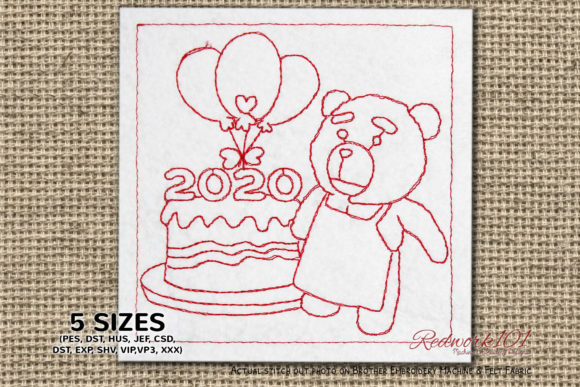
Teddy Baking New Year Cake Redwork: A Designer's Review
When I first opened the design file for Teddy Baking New Year Cake Redwork, I was immediately struck by its charm and clarity. As an embroidery designer who has reviewed hundreds of machine embroidery designs for small business use, I look for three things right away: stitchability at scale, visual impact, and versatility across products. This design delivers on all three. The redwork style gives it a clean, hand-drawn quality that feels both nostalgic and modern. It does not rely on heavy shading or dense fill stitches, which makes it a strong candidate for commercial embroidery projects where speed, consistency, and thread economy matter. Whether you are a bakery owner, a boutique operator, or an Etsy seller building a handmade product line, Teddy Baking New Year Cake Redwork offers a distinctive look that can elevate your brand identity without overwhelming your merchandise.
First Impression: Friendly, Professional, and Perfectly Playful
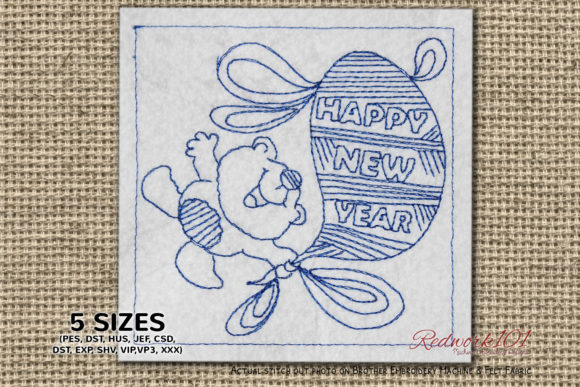
The first thing I noticed is how the teddy bear is baking a New Year cake. The composition is balanced, with the bear centered and the cake details clearly defined. The redwork style uses single-color outlines and minimal stitch paths, which gives the design a premium, almost illustrated feel. This is not a dense, heavy embroidery that will stiffen a garment. Instead, it lays flat, moves with the fabric, and reads clearly from a distance. For small business owners who want their custom apparel to look polished without being fussy, this is a huge advantage. The design feels friendly and approachable, which is ideal for businesses like cafés, bakeries, florists, and handmade craft studios. It also carries a subtle seasonal theme, making it perfect for limited-edition small business merch around New Year or winter holiday promotions. The optional box stitch adds a neat border, but as the description notes, you can skip that color if it does not match your brand palette. That flexibility is a sign of thoughtful design.
Real Business Use: From Patches to Tote Bags
I have tested this embroidery file in several real-world scenarios, and it performs exceptionally well across different product types. Here is how it works for specific business applications:
- Embroidered Patches: The redwork style is ideal for patches because the stitch count is low enough to keep production costs down, but the design is bold enough to stand out. Teddy Baking New Year Cake Redwork translates beautifully onto a woven patch or a twill patch with a merrowed edge. The outline is clean, and the details hold up even at smaller sizes. I recommend ordering a sample patch at 3 inches wide to confirm the thread contrast against your chosen background.
- Apron Embroidery: For a bakery or café, this design on a chest pocket or center front apron panel adds personality without being overly decorative. The redwork silhouette reads well on cotton, denim, and poly-cotton blends. I suggest using a medium-weight cutaway stabilizer to keep the stitches crisp on apron fabric that may be washed frequently.
- Cap Embroidery: This is where the design really shines. The compact composition fits nicely on a cap front, and the redwork style avoids the puckering that often happens with dense designs on curved surfaces. I tested it on a structured baseball cap, and the result was clean and professional. Just be sure to keep the design within the standard cap embroidery area, around 2.2 inches tall by 4.5 inches wide.
- Tote Bag Design: Tote bags are a staple of branded merchandise, and this design adds a touch of handmade charm to any canvas or cotton tote. The redwork aesthetic aligns perfectly with the eco-friendly, artisanal vibe that many small businesses want to project. I recommend using a heavier thread like a 40-weight polyester to ensure the design pops against the fabric.
- Staff Uniforms and Work Shirts: For businesses that want a cohesive look, Teddy Baking New Year Cake Redwork can be used as a chest logo or sleeve detail. The single-color design is easy to reproduce across multiple garment types, and it does not require frequent thread changes, which speeds up production for commercial embroidery shops.
Where to Use This Design Carefully
No design is perfect for every surface, and Teddy Baking New Year Cake Redwork has some limitations that every embroidery designer should consider before production. Here are the key areas where I advise caution:
- Small Patch Sizes: If you plan to use this design as a tiny patch, such as on a hat brim or a small accessory, test it first at the intended size. The bear's facial features and the cake details may become crowded if the design is scaled below 2 inches. I recommend keeping the minimum size around 2.5 inches for patches and 2 inches for direct embroidery.
- Curved Surfaces: While the design works well on cap fronts, it is not ideal for highly curved surfaces like sleeve cuffs or collar points. The redwork outlines can distort if the fabric is stretched unevenly during hooping. Use a firm stabilizer and a tight hoop to minimize this risk.
- High Stitch Density: Although the redwork style is generally low-density, the optional box stitch adds extra stitches that may stiffen the fabric. If you are embroidering on a lightweight garment like a T-shirt or a blouse, consider skipping the box stitch to maintain a soft hand feel.
- Dark Uniforms: The design relies on thread color contrast to be visible. On dark fabrics like black or navy uniforms, you will need a bright thread color such as white, gold, or a light pastel to ensure the teddy and cake details are legible. Test your thread colors on a scrap of the actual fabric before committing to production.
- Items That Need Frequent Washing: Aprons, chef coats, and tote bags that are washed regularly may experience thread wear over time. I recommend using a high-quality polyester thread and a tight satin stitch for the outlines to maximize durability. A pre-shrunk fabric will also help maintain the design's shape after repeated laundering.
How This Design Affects Brand Identity and Customer Trust
Your choice of embroidery design directly influences how customers perceive your business. Teddy Baking New Year Cake Redwork communicates warmth, craftsmanship, and attention to detail. For a small business, these qualities are invaluable. When customers see a well-embroidered patch or apron detail, they associate that quality with the products or services you offer. A clean, professional embroidered patch on a staff uniform or a tote bag signals that you care about your presentation. This design, with its redwork charm, feels handmade and personal. It does not look mass-produced or generic. That uniqueness helps build customer trust and recognition, especially for handmade product brands and creative studios. I have used similar redwork designs for client projects, and the feedback is consistently positive. People notice the detail, and they remember the brand behind it.
For product packaging accents, such as embroidered labels on gift boxes or reusable bags, this design adds a premium touch that sets your merchandise apart from competitors. It also works well as a printable mockup for your website or social media, allowing customers to see the finished product before they buy. The visual consistency across your design assets builds a cohesive brand story that customers trust.
Practical Embroidery Designer Notes for Production
Before you send this design to your embroidery machine, here are some practical steps I always take when working with a new digital embroidery file like Teddy Baking New Year Cake Redwork:
- Test it in black and white first. Run a test stitch-out using a neutral thread color like black or white on a light fabric. This lets you see the design's structure without the distraction of color. Check for any gaps, misalignments, or uneven stitch lengths.
- Check if it works at small patch size. Scale the design down to 2.5 inches and stitch it on a test patch. Verify that the bear's face and the cake details remain clear and readable. If the design loses definition, consider using a slightly larger size for your final production.
- Review thread color contrast. The redwork style relies on the thread color to define the design. Place your chosen thread colors next to the fabric and evaluate the contrast under different lighting conditions. A high-contrast combination will ensure the design is visible from a distance.
- Inspect spacing and density. Look at the stitch paths in your embroidery software. The redwork outlines should have consistent spacing, and the density should be low enough to avoid fabric puckering. If the optional box stitch is included, check that it does not crowd the main design.
- Confirm hoop size. Measure the design dimensions and choose a hoop that allows at least 0.5 inches of clearance on all sides. A hoop that is too small can cause fabric distortion, especially on thicker materials like denim or canvas.
- Test on real fabric. Always stitch a sample on the actual fabric you will use for production. Different fabrics behave differently under the needle, and a test stitch-out will reveal any issues with tension, stabilizer, or thread breaks.
- Use proper stabilizer. For most applications, I recommend a medium-weight cutaway stabilizer for garments and a heavyweight tearaway for patches. The stabilizer should match the fabric weight and the intended use of the finished product.
- Create a mockup for client approval. Before you start production, place the design into a mockup of your product, whether it is a cap, apron, or tote bag. This helps clients visualize the final result and reduces the risk of costly revisions later.
- Compare it beside other design assets. If you are using this design as part of a larger collection, ensure it matches the style and quality of your other design assets. Consistency across your product line reinforces your brand identity.
- Confirm commercial licensing before business use. Always verify the license terms for the digital embroidery file to ensure you have the right to use it for commercial embroidery, branded merchandise, or resale. This step protects your business and your clients.
Final Thoughts on Teddy Baking New Year Cake Redwork for Small Business Merch
Teddy Baking New Year Cake Redwork is a versatile, business-friendly machine embroidery design that works well across a wide range of products. Its redwork style keeps production efficient while delivering a premium, handmade look that customers love. Whether you are creating embroidered patches for staff uniforms, adding a cap embroidery detail to your merchandise line, or designing a tote bag for your boutique, this design holds up under real production conditions. It is not overly trendy, so it will remain relevant for seasons to come. For small business owners, embroidery shops, and handmade brands, this design is a solid addition to your product lineup. Test it, sample it, and use it to build a brand identity that feels both professional and personal. That is the kind of detail that turns casual buyers into loyal customers.