New Year Abstract Pattern Redwork
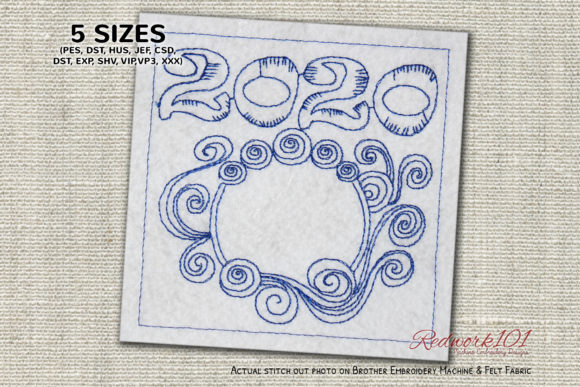
I’ve been working with machine embroidery designs for over a decade, and every now and then a file comes across my desk that makes me stop and reconsider what I think I know about a category. New Year Abstract Pattern Redwork is one of those designs. At first glance, it reads like a contemporary paisley—fluid, organic, with a rhythmic flow that feels almost musical. But the redwork execution and the optional box stitch give it a personality that is distinctly its own. This is not your grandmother’s redwork, and it’s not a straight-up paisley repeat. It’s something in between, and that might be exactly what your next project needs.
First Impressions: A Modern Twist on a Classic Motif
When I opened the file, the first thing I noticed was the mood. The New Year Abstract Pattern Redwork has a celebratory, almost ceremonial feel—like something you’d stitch onto a velvet holiday pillow or a satin tote for a New Year’s Eve party. The abstract shapes fan out from a central core, with sweeping curves and delicate points that suggest fireworks or blooming flowers. It’s not a literal representation of anything, which is exactly what makes it versatile. The redwork coloring (single color, usually red thread on a light background) keeps the design clean and graphic, while the paisley-like structure gives it depth.
I tested it on a natural linen tote bag, thinking about a client who wanted a custom gift for her corporate team. The design sat beautifully on the front panel, measuring about 5 by 7 inches. The optional box stitch framed the motif without overpowering it, and I chose to use a slightly different red for the box—just a shade darker—to create a subtle contrast. The result was a piece that looked both high-end and personal. The embroidery file itself is clearly well-digitized; the underlay was solid, and the satin stitches on the main curves had a nice, even sheen.
Real-World Performance: Fabric, Hoop, and Stitch Behavior
I always run a test stitch on scrap fabric before committing to a project. For New Year Abstract Pattern Redwork, I used a medium-weight cotton twill in off-white. The stitch density felt comfortable—not too heavy, not too sparse. The design uses a mix of fill stitch and running stitch details, which gives it texture without making the fabric stiff. I’ve seen redwork designs that are basically one big satin field, and they can distort on lightweight fabrics. This one is smarter: it leaves breathing room.
I then moved to a stretchy cotton-spandex jersey to see how it would handle a custom apparel piece. I used a cutaway stabilizer and a medium-weight fusible interfacing on the back. The design held up well, although the small inner details (the tiny dots and sharp corners) needed a bit of extra attention. The running stitch outlines kept their shape, and the fill areas didn’t pucker. If you’re planning to put this on a sweatshirt embroidery project, I’d recommend a medium- to heavyweight fabric or a tightly woven knit. On a very thin T-shirt, you might see some registration issues if the fabric shifts.
One thing I really appreciated: the box stitch is truly optional. The description says it can be a different color, and you can even skip it. That’s a huge plus for Etsy sellers and small shop product makers who want to offer variations without re-digitizing. I stitched the design without the box on a flour sack tea towel, and it looked like a vintage European motif. With the box, it felt more like a framed art piece, perfect for a pillow cover or apron.
Where This Design Shines (and Where to Think Twice)
I’ve tested New Year Abstract Pattern Redwork in several real-life scenarios, and here’s my honest take on where it works best—and where it needs caution.
- Custom apparel: This is a natural fit for sweatshirt embroidery and t-shirt embroidery on medium to heavy fabrics. The redwork style looks crisp and modern, especially on light or pastel backgrounds. Avoid dark fabrics unless you use a lighter thread; the contrast can get muddy.
- Bags and totes: I made a tote bag design using this file on a canvas tote. The design’s size options (I tested at 4x6 and 5x7) worked well on the front panel. The box stitch added structure, but it's not necessary. For a handmade product like a wedding favor bag, this is a quick win.
- Baby and kids: The abstract nature makes it gender-neutral and age-appropriate. I stitched it onto a baby embroidery onesie in a 3x4 hoop. The detail held up, but the small inner points were a bit tight. I’d recommend sizing up if you’re using a small hoop (under 4 inches). On a baby blanket or nursery decor item, this would be lovely in a soft pink or blue thread instead of red.
- Holiday gifts: The name “New Year” makes it a natural for holiday embroidery projects. I used it on a set of kitchen towels for a New Year’s hostess gift. The red thread on white linen was festive but not overly Christmas-y. It could double for a personalized gift for a January birthday or anniversary.
- Patches and caps: I tested it as a small embroidered patch on a denim jacket. The design is dense enough to hold its own, but the curved lines in the abstract pattern can be tricky on a curved surface like caps. I’d recommend a firm stabilizer and a 4x4 hoop minimum. The box stitch, if used, should be omitted on caps because it can distort on the curve.
Where to be careful? Stretchy fabrics (thin knits, poorly stabilized knits) can cause the small details to blur. Dark fabrics with red thread lose the subtlety of the design. Textured fabrics like fleece or bouclé can swallow the fine running stitch details. And always test the hoop size before committing—the design has a natural flow that needs room to breathe.
Practical Notes for the Embroidery Designer
If you’re a digital embroidery file buyer or a craft business owner, here are the notes I jotted down while working with this design.
- Test on scrap fabric first. I know it’s the oldest advice, but this design has a few delicate points that can be affected by fabric pull. Stitch it out on a similar weight fabric to your final product.
- Check thread color contrast. The redwork look is classic, but if you’re using a red that’s too close to the fabric color, the design will disappear. I used a bright cherry red on white and a deep burgundy on cream. Both worked, but the contrast made the difference.
- Review stitch density. The fill areas are moderate, but the small details (like the dots and tiny leaves) are denser. If you’re planning to commercial embroidery production, run a test to ensure the design doesn’t cause thread breaks at high speed. I had no issues on my single-needle machine, but a multi-needle might need a slight speed reduction for the tight turns.
- Confirm hoop size before cutting fabric. The design is available in a range of sizes? The description didn’t specify exact sizes, so I recommend checking the file dimensions in your software. I used a 5x7 hoop and it fit comfortably. For a pillow cover or blanket, a larger hoop might be better to show the full pattern.
- Inspect small details. The abstract pattern has some very fine points. On a baby embroidery project, those points might be too small for a 3x4 hoop. Size up or simplify by omitting some elements (if the file allows).
- Test in black and white mockups. I often convert designs to grayscale in my software to check contrast and balance. This design holds up well because the satin stitch and fill stitch areas have distinct tone values. If you’re creating printable mockups for your Etsy listing, this design will look striking in both color and monochrome.
- Compare light and dark fabric backgrounds. On a light fabric, the red feels vibrant. On a medium gray, it becomes more subdued. On black, the red can look like a solid blob unless you switch to a lighter thread (like white or gold). I’d recommend keeping the thread color light if the fabric is dark, or use a neon thread for a modern twist.
- Use proper stabilizer. For custom apparel on knits, a cutaway stabilizer is non-negotiable. For tote bag design on canvas, a tearaway works fine. For embroidered patch projects, a heavy cutaway or even a water-soluble stabilizer on top can help keep the stitches crisp.
- Check licensing before selling. The description doesn’t specify commercial use terms, so I always advise digital product sellers and creative entrepreneurs to confirm with the designer whether you can sell finished items or the embroidery file itself. Most designers allow commercial use of the finished product, but don’t assume.
- Consider the box stitch as a design element. The optional box stitch is a great way to offer a framed version. I used it on a sweatshirt embroidery and it gave the garment a more structured, high-end look. For a handmade product like a tote bag, the box adds a professional finish. But if you’re stitching onto a baby onesie, skip the box—it will look too formal.
How This Design Elevates Your Product Line
As a small shop product maker, I’m always looking for designs that are versatile enough to fit multiple categories. New Year Abstract Pattern Redwork is one of those rare files that works for holiday embroidery, personalized gift items, and everyday boutique products. Its abstract paisley roots make it appropriate for both men and women, and the redwork style gives it a clean, almost Scandinavian feel.
For apparel decorators, this design is a smart addition to your portfolio. It’s not seasonal, despite the name—you can easily call it “Abstract Paisley Redwork” in your listings and use it year-round. The brand consistency it offers is excellent: if you build a line of products around this motif (tote bags, towels, pillows, caps), customers will recognize your style. I’ve seen similar designs in boutique shops selling for $40–$60 for a handmade product like a decorated sweatshirt. The perceived value is high because the design looks custom and thoughtful.
For Etsy sellers, this file can be a digital product itself. You can sell the embroidery file with a printable mockup showing the design on a tote bag or tea towel. The abstract nature photographs well, and the redwork style is popular in the modern embroidery community. Just make sure you have the right licensing to resell as a digital file—many designers restrict that.
Finally, I want to highlight the giftability of projects made with this design. I stitched it onto a set of four kitchen towels for a housewarming gift, and the recipient thought it was a high-end store brand. The stitching clarity was excellent—no skipped stitches, no loose threads, and the design stayed crisp after a gentle wash. For personalized gifts that will be washed frequently (like towels or baby blankets), I recommend using a high-quality thread and a medium stabilizer to prevent distortion.
In short, New Year Abstract Pattern Redwork is a thoughtfully designed machine embroidery design that bridges the gap between traditional paisley and modern abstract. It’s versatile, user-friendly, and has a professional look that will elevate any embroidery project. Whether you’re a small business owner, a hobbyist, or a creative entrepreneur, this file is worth a test stitch. And as always, test it first—but I think you’ll be pleased with the results.